Showing posts with label Dru Marland. Show all posts

Saturday, 31 March 2012

The Secret Blackbird

The Secret Blackbird is hot off the press! More adventures in accidental ornithology, as Geraldine looks into the whys and wherefores of garden birds disappearing in the summer.
"Suddenly, every summer, there's an uncanny silence throughout the land, and I'm asked, where are the birds? Has my robin deserted me? Is it the global warming? Is the country going to the dogs? Have the blackbirds left the sinking ship?
This book explains what's going on; why our birds disappear in the summer, what they are up to, why they aren't singing, and when they will come back"

Available from Etsy (click on the link to go to my shop!) 

Monday, 20 September 2010

The Case Of The Curious Crow


The new book is back from the printers, and very nice it looks too!

It's the second book of true bird stories from Geraldine Taylor, illustrated by me. Our previous one was The Coffee Thrush, published last year. It proved very popular, and we have high hopes for this one too. Plenty of good, closely-observed stories. And I'm very happy with my pictures too.


The Case Of The Curious Crow, originally uploaded by Dru Marland.


If you would like a copy, then you can order one for £5 (P&P included) from

Geraldine Taylor
Eyeon Books
28 Berkeley Rd
Bristol
BS6 7PJ

tel. 0117 9732787
e-mail eyeon.books@virgin.net


...and I've listed the book on ebay, which is handy if you have a PayPal account.


...or you will be able to get it on the Bristol Books and Publishers website (click on the link to the right of my blog page there, or follow this link here and hunt around a bit; it's not yet been listed there, but when it does I'll edit out this sentence...)


Tuesday, 24 August 2010

joining in


Commenting on my post yesterday, Lucy suggested that it was a bit retrogressive going along on the Bristol Pride march. I kind of get what she means, but then perhaps there are all sorts of Prides, and each one is what you make of it. Or it is the sum of what the people who have organised it and participated in it, make of it.

The Bristol Evening Post mentioned the event on their website, and attracted some interesting comments, some of which sadly got deleted (also sadly, my own comment didn't actually make it onto the website, but hey)


I like the opinion expressed by Patrick, that


not only my LGBT friends but every other minority in this country ....have their particular views and preferences thrust in front of my face all of the time!
I think it was worth joining in Pride just for that...

It's a tricky business, balancing between acknowledging and dealing with my trans history, and just getting on with life. And I suppose there are no right answers, and possibly no particularly wrong ones either. But, reading the EP comments section, it's evident that there's still no shortage of ignorance. The sort of ignorance that can lead to bad things happening to people.

As I was looking through my old stuff yesterday, I noticed that this is what was happening in my life, on board the Pride of Bilbao seven years ago. It's good to look at it and think how far I've come since then. Seven years. Crikey!
So a notice goes up in the Engine Control Room about the Shipboard Management Meeting, where crew grievances will be addressed; we are invited to write our whinges on the adjacent paper. The usual gripes come up; Why is the food so crap? (because it is...); When are we going to get financial parity with the Deck Department? (when hell freezes over...). I add my own; When are we going to change filthy pornographic calendar in Control Room for pictures of fluffy bunnies and daffodils? ...the next day, I find that it has been laboriously scribbled over to make it entirely illegible, and FUCK OFF scrawled under it.

"Right, this is war," I think.

But, to get things in context first, I check the big book of Company Regulations. There's stuff about drugs and drink, standards of appearance and something called 'horseplay'. But there is no company policy on pornography. I take a photocopy of this month's FLUFF 'N' STUFF calendar girl hanging in the Control Room, and show it to some of the girls who work up in the passenger department. They blanch, and express their shock that it is allowed. Fortified in my resolve, I pen my amended question; What level of explicitness should be deemed appropriate for the pornography displayed in work areas? -for example:

* tits?
* tits and bums?
* tits and clits?
* blimey, you can see what she had for breakfast?

.this is what I understand is called a When Did You Stop Beating Your Wife
question, which cannot be answered without the answerer damning themself...

But I think I'd better have a word with the Chief to sound out the water. He points out that making an issue of the calendar might alienate me. He really can't see anything wrong with porny calendars. He puts it down to my hormonal changes; "In all those years at sea, you must have read pornography, surely, Dru?"

"No, Chief; I've always felt just the same about it as I do now..."

The Chief wants to keep the matter 'in house'. And so the matter rests, with a vague understanding that next year's calendar will be a little less, er, risque...

And next morning, to make up for it, Chief enters the Control Room with a brisk "Morning, ladies and gentlemen."

"I don't see any ladies," says Dave S, the electrician, a grumpy old sod from Hartlepool, a town whose inhabitants gained notoriety for hanging a monkey, thinking it was a french spy.

"Drusilla," says the Chief, gesturing royally in my direction.

"He's got balls, hasn't he? If he's got balls, he must be a gentleman."

With insight like this, one might reasonably fear for the safety of any
monkeys unfortunate enough to find themselves in Hartlepool.

I come up with the great answers to that one, later, of course. Too late. O
well.

+++++++++++++++++++++++++++++++++++++++++++++++

(and this one from August 29 2003)

You may recall, and if you don't, then read the aforegoing, that the porny calendar incident was left hanging; along, indeed, with the porny calendar.

A fortnight ago finds me back in the engine room after a few weeks' absence. I find that the calendar in question has been graffitied; someone has written "DRU" in a very immature hand, and an arrow pointing to the vagina. I am outraged. I discuss it with the engineer of the watch. He gives his opinion that I should let it lie; "You've got to be broad minded at sea," he says.

I mull it over, and by the next morning think maybe he's right. Don't want to be confrontational... but then I go into the Control Room and see everyone sitting drinking their tea, and this THING hanging on the wall as though it was perfectly normal. I take it down, call for everyone's attention, point out the graffiti, and say that it is entirely unacceptable. I then rip up the calendar and bin it.

Instantly I get two men shouting at me; one tells me I'm "....going to get done in; not if, but when...." I leave the engine room, and award myself the morning off....

(a friend helpfully suggested I have a word with the Union rep. "It was the Union rep who threatened me," I replied.)

The Engine Room Trolls have a mutter, and decide to send me to Coventry. At last count, there are seven of them not speaking to me; they sort of glower sulkily as I pass, like little boys who've been caught out doing something they shouldn't.

Thursday, 24 June 2010

The Case Of The Curious Crow


The Case Of The Curious Crow, originally uploaded by Dru Marland.

Here are the illustrations for the book that Geraldine Taylor has written. It's going to be published in the autumn.

Thursday, 29 April 2010

moonlight bear

"Slugs is to badgers as rice is to the Chinese"

I've finished the picture, and am very happy with it. I was worried about how the hawthorn tree would turn out; I blanked out the blossom with masking fluid, which I also used to frame the night sky and the moon. It took ages to get the latex solution out of the brush.... I'd never even heard of masking fluid until a few years ago; it's jolly useful. But a pig to get out of a brush.

I also had to put off painting the sky until the shops opened, so that I could get some indigo watercolour. And then hummed and hah-ed about whether I should get some Cotman watercolour at £1.99 a tube, or Artists watercolour at £5.99 for a tiny tube. I settled for the Cotman. It seemed to work OK. (I once made a nasty mess using some watercolour from LIDL. You can't be too careful. Well .....perhaps you can be too careful. Anyway...)

Still learning.

This picture is for Geraldine's next book, The Case of the Curious Crow. Here's a link to our last book, The Coffee Thrush

Wednesday, 20 January 2010

wild places

At last I've got into gear and am painting pictures, and I'm pleased with the way this one is going. It's a fox catching hailstones in its mouth. It was something that Geraldine Taylor spotted on the Zoo Banks, on the Downs. Assuming I don't mess the picture up, it'll be in the Bristol Review of Books and in Geraldine's new work-in-progress book.

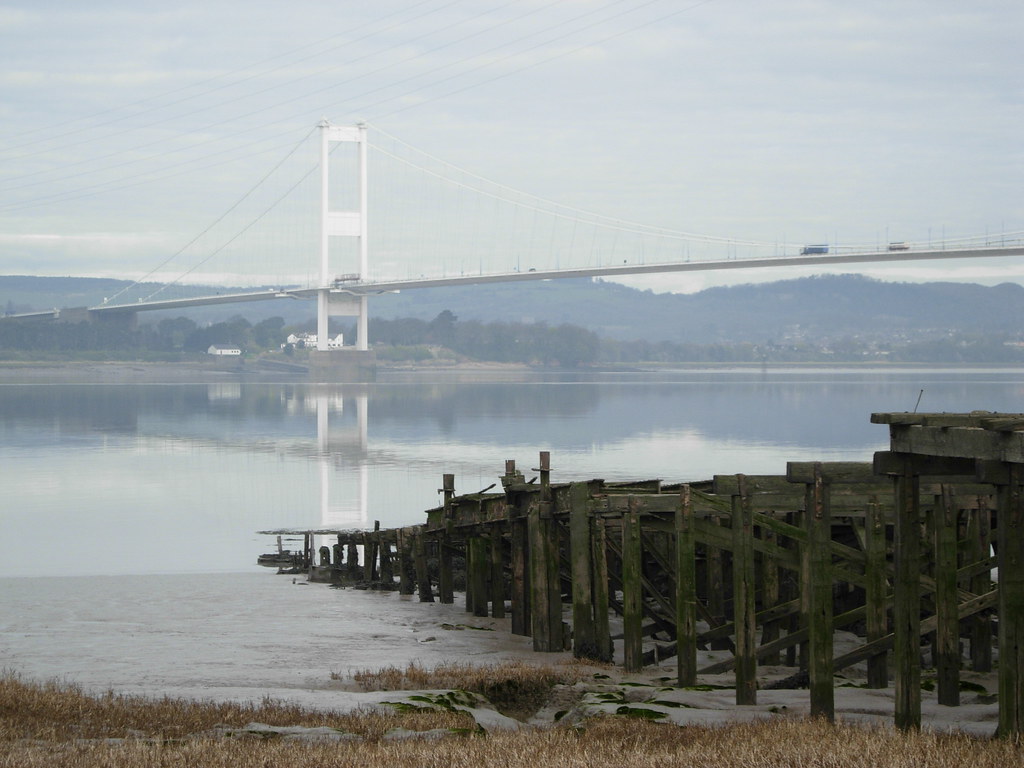
There's been a lot of nature around the place lately. I walked along the Severn estuary on Sunday, exploring the bit where the railway tunnel and the new bridge intersect.


This is a shaft that was dug to tunnel outwards from, and is now used to pump water out of the tunnel. The one on the Welsh side is more impressive, because it pumps out the Great Spring, which was discovered in dramatic circumstances during the construction of the tunnel, and which has in its time supplied an ordnance factory, a paper mill, and, now, the brewery that makes Becks and Stella beer.

Anyway, the recent snows have been thoroughly washed away by the rain, and the sun shone brightly, and the birds agreed with me that it felt like spring, and were singing in a chirpy sort of way all over the place. A couple of blue tits were bobbing round in circles, occasionally performing sudden vertical climbs. Similarly, a grey squirrel in next door's garden was performing high-speed circles punctuated by great leaps into the air. Lord knows what that was about; perhaps it was art.

And the magpies in the plane tree at the front of the house have been repairing the nest where they reared their single chick last year, before it was killed by the local fox. Gratifyingly, the car parked below the nest was spattered with twigs and magpie crap. It is this car's owner who cleared the snow before driving away last week, throwing the snow onto the footpath where I had cleared the snow. Karma!

Wednesday, 7 October 2009

Alabaster Thomas


There's never enough time, is there? -today is National Poetry Day, and apparently the theme is Heroes and Heroines. So expect to see gossiping shoppers swapping sestinas, commuters quickly composing haiku, mechanics mouthing sonnets under bonnets. Heroically.

Or something.

My poem that I've been working on is still unfinished, but here it is, because when I put it up on the blog it will take up a life of its own and almost certainly sprout a good final verse. It's based on an encounter I had over in Wales last month.

"But what one will remember about New Bethel is the crowd of monuments in the BURIAL GROUND, and in particular the presumptuous memorial to James Thomas 1901, bearing a statue which overtops the chapel roof”

John Newman, Buildings of Wales: Gwent/Monmouthshire


Alabaster Thomas

Startlingly luminous there in the evening sunshine,
Mr Alabaster Thomas towers high above the tombs,
His haughty gaze fixed north to Pen y Fan on the horizon
Across New Bethel's rooftop cast in crepuscular gloom.

St Tudor's congregation saunter up to Mynyddislwyn;
Or sheep, come down for shearing, clatter down upon their way.
His gaze remains averted; other flocks are all alike to him
Intent to watch his chapel folk until the Judgement Day.

The crowded graves below him are both even and gregarious;
Grey Pennant slabs that huddle in the lee of the high wall.
Although his lofty pedestal is draughty and precarious
He scorns to turn his collar up and fears not the fall.

He has seen the hilltop slagheaps spread and grow above the pitheads
And the coal that fuelled an empire go to Newport Docks by rail
And the grass that spread and blanketed the slagheaps and the sidings
And the fires of Blackwood's foundries flare, and flicker out, and fail.

Rust upon the iron railings, creeping ivy on the masonry;
The roots of rosebay willowherb caress the resting skull;
The worms by now have long since tried that long-asserted dignity
Where the mouse that eats the blackberry takes refuge from the owl.
With the setting of the sun departs the glow of Alabaster-
He's just a deeper shadow now against the wheeling of the Plough.
Cars on the dual carriageway bring shoppers home from Asda
For dinner with the telly on then up the pub for after,
Time please, then car doors slamming, and the sound of distant laughter;
Then silence, and we say "Goodnight - but just for now..."


by the way, thanks to the wonder that is Street View, you can stand next to the chapel. But you won't see the sunset that Alabaster and I saw


View Larger Map

Thursday, 27 November 2008

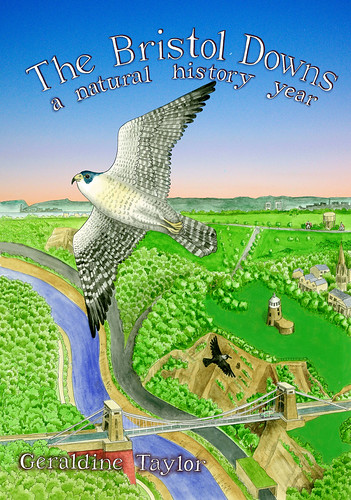
The Bristol Downs: another book event


So. On Tuesday 2nd December, we're doing a little show at Bristol Zoo, which will include Geraldine giving a talk, and me doing a Powerpoint thing about illustration. And there will be mince pies, apparently. And I shall be taking along my big bottle of Damson vodka, too. What's not to like?

Sunday, 26 October 2008

another launch

At last! The books will be here from the printers on Tuesday, and we do a launch at Stanfords in Bristol on Wednesday evening.

It says I did 'over 200 illustrations'. Gosh. I'm sure it's right. No wonder it took so long.


Tuesday, 7 October 2008

canoeing to Chepstow (part 4)

From the archives... this is an account of a canoeing trip from Severn Beach to Chepstow that Richard and I did, ten years ago. Serialised, for ease of digestion.

Part 1 / Part 2 / Part 3 / Part 4


A dark shape flitted across the water. "Porpoise!", I cried, pointing helpfully. Richard raised a quizzical eyebrow. I looked up. "All right, then, seagull's shadow. But it might have been a porpoise." The eyebrow remained quizzical. We paddled on in silence. Occasionally, as is the way of canoeing, the front end would spontaneously decide to swing off in an entirely different direction to that which we intended, and we, having no apparent say in the matter, would follow it. So we would pause, and review our progress, looking back at the rather dull suburban houses of New Passage, growing smaller with each gyration, and fail to make out either P or Sprout. And we would propound theories about why canoes do that, or at least, why this particular one does it. Richard opined that it was down to eddies. I took the engineering approach, maintaining that it was just one of those things.

We were getting along just fine.

"Proper Preparation and Planning Prevents Piss Poor Performance," Richard intoned portentously, or, indeed, Portentously. Certainly, we had left little to chance.

Richard and P had been alarmed at Clive's reaction to our proposed voyage. Clive is very much the outdoors type; he has climbed just about every vertical inch of the Alps and the Himalayas, and probably the Andes too, as an afterthought; and, more pertinently, he has canoed about a bit, including an intrepid trip through the dank and rat-infested tunnels under the centre of Bristol, where the River Froome has got swallowed up by the city over the years. But Clive seemed rather to balk at the notion of crossing the Severn Estuary, when we mentioned it while we were round at his house, borrowing a replacement paddle. Richard got nervy at this reaction. He got on the phone to HM Coastguard Centre at Swansea, and was told austerely that "As long as you take the right precautions, I don't see why there should be any problem." This slightly Delphic utterance was, of course, a standard “cover your arse” sort of response; but Richard seemed slightly reassured.

I pored over OS maps, the Admiralty Tidal Stream Atlas, and the Bristol Channel Tide Table. Having things quantified and down in print on a page in front of me is vaguely comforting, even when they are incorrect or they say things like

ADVICE TO SMALL CRAFT

The waters from the Severn Bridge to the River Avon can be rough and there is virtually no shelter. The tidal streams are very strong, reaching 8 knots on full flood and ebb and sea conditions can deteriorate sharply when the wind is against the tide.

I didn't let Richard see that bit; he would only have worried unnecessarily.

The weather forecast, at least, couldn't have been better- "Lundy, south westerly, two, occasional three, fair, good." So the wind and the tide would be in the same direction. And the tide was a neap. This confused Richard, who thought it only fitting that, at this season of the year, it should be a spring tide.*

And now here we were, bobbing around, several fathoms above the ooze where old shipwrecks lay swallowed up and forgotten, looking like a regular pair of cockleshell heroes rigged out in waterproofs and lifejackets, with smoke flares taped to our arms (so they wouldn't get lost in a capsize), a useful Tupperware item to bale out water, should it get in in any quantity, a map and compass and pencil in the unlikely event that I should have the opportunity to fix our position by triangulation (something of a waste of time in these circumstances, but fun to try), and boiled sweets and, in Richard's case, cigarettes. And, where a sailor of old would wear a gold earring to pay for a Christian burial wheresoever his corpse may be washed up, I, more practically and more optimistically, had a five pound note in my pocket to buy beer.

What the hell, I thought, and had another sweet. This was the placid part of the voyage, in limbo between the bustle of departure and the bother of a landing. Scarcely a ripple disturbed the water, save where a distant catspaw idly dabbed the surface, or where a back-current running alongshore over the nearby Mathern Oaze* swung out into the main stream. The little boat which we had seen the day before continued to ply its way to and fro, to and fro; then, losing interest as lunchtime drew nigh, it diverged on an urgent voluntary errand, and went chugging off in the direction of Avonmouth. To the south, the Avon and Somerset Constabulary's Twin Squirrel helicopter patrolled the complex of motorway junctions, looking for trouble. There'd be no shortage of people to spot our smoke flares in the unlikely event that we should come a cropper; nor of people to come to our aid. I quite fancied the idea of being winched aboard a helicopter and plied with black coffee laced with rum. On the other hand, I also quite liked it where I was; the spring was well advanced in the direction of summer, and the water, if not actually warm, was at least not of a temperature to knock the breath out of you and give you a life expectancy measured in minutes. We could always swim ashore, or just lie back and be carried to our journey's end.

Presently, and all too soon, we approached Beachley Point, crossing the area where the flood was making up its mind whether to swing left to Chepstow, or right to Gloucester. We took to the paddles, heading north for a while, in case it decided to take us with it up the Slime Road. The water eddied and whorled, and gobbets of sediment, of varying degrees of opacity, rose to the surface, in a manner reminiscent of those revolting lava lamps which enjoyed a vogue back in the wild days of the 1970s. Where yesterday all had been greyness, now every shade of brown seemed to be represented here, under the beneficient agency of the sun.


* Tidal range (the difference in height between high and low tides) is at its greatest at the full and new moon. Tides at these times are called "springs". And the tidal range is at its least at the time of half moons. Tides then are called "neaps". Because of all the extra water at spring tides, currents tend to be at their greatest then.

* Some local names for features in the landscape of the shores of the Bristol Channel:

Oaze: a mud-bank. The term is described by OED as obsolete.

Pill: a tidal creek

Rhine, or reen: "a large open ditch or drain" (OED)

*******

The banks drew closer on either side. We shot under the motorway, and rounded the bend which cut off our backward view of the Severn and made us feel that we were now on a proper river. The banks remained estuarine, though; in the rank sedges and the pills, flotsam and jetsam (but chiefly flotsam) lay higgledy-piggledy; plastic drums, plastic bottles, plastic everything, bits of old tat, oil-stained, mud-stained, unloved and unlovely; or, dislodged by the rising waters, it bobbed along in search of a new home. A digger was at work banking up soil in the region of some rather nasty new bungalows, perhaps to keep the water at bay, perhaps to hide their faces for shame. They looked forlorn and exposed. Still, better to stick nasty bungalows there than somewhere nice, I supposed. An elderly couple stood by a For Sale sign. Perhaps they liked the view of the motorway.

Just behind where they stood, on a rise called Buttington Tump, a Danish host which had come across from Essex back in 894 had been encircled by the a force of King Alfred's levies and a contingent of Welsh . A stand-off evolved, as Alfred himself was busy in Devon with another host, and his thanes were reluctant to take the initiative; until they had run out of food and finished eating their horses, at which point they rolled up their sleeves and got stuck in. 'And,' as the Anglo-Saxon Chronicle puts it, 'the Christians had the victory.'

There was much of this sort of thing going on in those times, with bunches of Danes wandering about, acting loutish and stealing whatever they could, in a manner rather akin to the more imaginative gutter press descriptions of New Age Travellers. What with the ratepayers enduring these antics and having to support Alfred's men as well, it was scarce any wonder that food and the lack of it was a constant preoccupation. In 915 the remnants of another host, finally beaten after ravaging their way up the Welsh bank of the Severn estuary, were trapped on the island of Steepholme, where some of them starved to death, and the remainder eventually escaped through Dyfed to Ireland. Presumably they had been waiting for a favourable wind. More peacably but perhaps rather alarmingly, the seas were also occasionally punctuated by boatloads of pilgrims such as those who, in 891, were washed up in Cornwall, having set off from Ireland without any means of propulsion 'because they wished for the love of God to be on pilgrimage, they cared not where'.

I certainly cared where, for my own part; the afternoon had now arrived, or, more pertinently and bearing in mind the five pound note in my pocket, the sun was over the yardarm; and the flood tide was beginning to fail. We passed wharves and jetties, where well-tended boats bobbed jauntily, and ill-tended boats, attaining a level of decrepitude unattainable by any other form of transport, sank uncomplainingly into oblivion. Close by an imposing cluster of industrial buildings, equally idle, sat a group of workmanlike boats; Resolute Lady, a tub of a thing with a mechanical digger lashed onto her front end, thus transforming her into a dredger; Hook Sand of Hull, a purpose-built dredger, with a large portable generator lashed onto the after deck, thus, presumably, transforming her into a dredger with an auxiliary power supply. Here, clearly, was an outfit with a talent for the ad hoc solution. A caterpillar digger on the quayside was paused from the work of unloading, while the driver welded something back onto it. Above and around him, oil seeped from leaky hydraulic seals on the digger arm and dribbled, disregarded, to the ground. It was heartening to see some evidence of industry in these otherwise neglected wharves.

We rounded the last bend, beneath a railway bridge which appeared to have been built upside-down, and sighted the rather charming iron bridge and, beyond and above it, the castle of Chepstow. On the town side of the river, elderly people, singly, in pairs, or with small dogs, promenaded by the bandstand, or supped tea and buns at the Wye Knot cafe. A pleasure boat, Toura D, fluttered a red dragon ensign, defying the slightly irregular Union flag which had been painted on the lower reaches of the cliff which rose on the English side of the river. The cliff rose sheer for a couple of hundred feet, to where villas peeped coyly from the wooded upper slopes. Less coyly, a gardener appeared at the top and hoiked a pile of garden rubbish over the edge, and followed it with a black plastic bag which disembowelled itself on the way down and garlanded a bush above the water.

"Bloody English," I said, taking the Welsh part in this case, on the grounds that I have lived among these people and do not understand them. But then, this was more an example of people's attitudes in general to waterways and their use as an oubliette. Up there in the castle, there still exists a rather dramatic privy, poised over the clifftop with a view of the water far below through the aperture. It looked rather fun, though I wouldn't like to use it when an easterly was blowing. And it was at least disposing of something the fish might gain something from.

Already the tide was ebbing. We disembarked gingerly on a pontoon, and scrambled up the bank. Alas, no welcoming committee. An elderly couple paused as we removed the more outlandish features of our canoeing garb. "Where've you come from?" the man asked. "Bristol," I replied, in a pathetic and not entirely honest attempt to sound impressive. It didn't work. They were entirely unimpressed.


canoeing to Chepstow (part 3)


From the archives... this is an account of a canoeing trip from Severn Beach to Chepstow that Richard and I did, ten years ago. Serialised, for ease of digestion.

Part 1 / Part 2 / Part 3 / Part 4
Meanwhile, back in the 19th century, the advent of steam had increased the degree of reliability of transport up and down the estuary. Several city-to-city shipping services were up and running; the St George Steam Packet, which called in at Tenby on its way from Bristol to Ireland; the Merthyr Packet, which sensibly ran from Bristol not to Merthyr but to Cardiff; and the Bristol and Chepstow Steam Packet, whose 'fast-sailing iron steam packet WYE' offered a passage in under two hours for anything from a foot passenger (1s 6d) to a four-wheel carriage (15s), and a linked coach service to Monmouth. But the timetabling of the services was, as ever, subject to the tides.
Then came the railway tunnel. Construction began in 1873, and, despite serious flooding when a huge underground spring was struck near Sudbrook, followed by inundation by a tidal wave in 1883, passenger services began in 1886 "without fuss or demonstration of any kind... with a freedom from smell truly marvellous." This spelt the end for ferry services, which would not revive until motor vehicles started making their presence felt.
Messing about in boats became a popular recreational activity, though. In 1887, P&A Campbell moved to Bristol from the Clyde, where their passenger service had likewise been rendered obsolete by the railway. They operated a fleet of paddle steamers, which ran into pretty well all the Bristol Channel ports until 1971, when they withdrew from the upper Channel. Today a summer pleasure cruise service is provided by Balmoral, an old Clyde motor ferry; and, occasionally, Waverley, a paddle steamer from that same region.
We Britons are proverbially endowed with a genius for queueing; looking at old photos of the Campbell steamers, one sees this genius in its expression. Long, long ranks of trippers stand stoically along quaysides and decks from Bristol to Barry (not in one continuous queue, obviously), awaiting their turn to embark or disembark. Scarcely to be wondered at, then, that, when motoring became affordable to the masses, those masses took readily to the relative freedom of the road. The native genius could not be kept down, though; presently, the little ferry boats carrying cars across the Aust Passage enjoyed their own ranks of stoic supplicants. Queues, now, for the Modern Age; at once in close proximity to our fellow citizens, and cut off from them, ensconced in their beloved motor cars. Presently the passengers were able to entertain themselves, while awaiting their turn on the boat, by watching the construction of the new Bridge, right there above them. When the Bridge opened, in 1966, people came in their cars from miles away for the privilege of queuing up to drive across it. And then off they went to queue somewhere else. Until so many of them were doing it, that the Bridge itself became a bottleneck, and a second one was deemed necessary. And behold, in 1996 it too opened. But this time, not so many people came to queue up for the first mad scramble to, or from, Wales. Alas, we are become old and cynical.
Back at the observation platform at Aust, I wiped the lenses of my field glasses, which had become spattered with rain, and looked again at the little boat chugging to and fro just below the Bridge. From the pier where the electricity pylon hefted its lines far above the water; across to the islet at Beachley Point where the ruined chapel of St Tecla failed to look romantic; then round and back again. What was he up to? Taking soundings? Practicing for an invasion? Well, whatever; who could say; we had problems of our own.
Richard peered glumly through another pair of glasses. P, my partner and, for the purposes of this expedition, transport manager, turned in disgust from the coin-in-slot binoculars which she had just fed, and which had repaid her with a fuzzy and not-very-magnified view. Sprout snuffled in her harness, snug inside my coat, and dislodged her hat. We were a ghastly crew. I thought of that bit in the film "The Battle of Britain", when the head Nazis stand on a clifftop in the Pas de Calais and peer at England through their great big binoculars, smacking their lips all the while in a Hunnish sort of way. I hoped that our projected expedition would enjoy better success than their little venture.
From the south-west came a vigorous breeze, which felt every bit of the Force 4 which had been foretold on the shipping forecast that morning. It harried the grey clouds towards us. It chivvied the flood tide in the direction of Gloucester. Round the bridge piers, the grey water eddied and churned into a lighter shade of grey. The distant hills were grey, before they became blotted out by the mist. Only the complex of chimneys and inscrutable tall structures at the Avonmouth chemical works, a few miles downstream, failed to look soluble; but they made up for this with the vapours which emerged from their top ends and contributed to the general airborne greyness.
The plan had been to launch the canoe at the old Aust ferry slip. It being four miles from there to Chepstow bridge, I figured we'd need an hour to get there, and that, if we started an hour before high water, we'd be carried up the Wye on the dying flood. It was now apparent that this would be impossible, a prognosis which confirmed the admonitory tone of my Bristol Channel tide table;
"In position 51º 36'N; 2º 36'W* (The Shoots), Tidal Streams attain between 3 and 8 knots. There is virtually no slack water period."
At least we could savour the descriptive nature of place names like 'The Shoots', whence the tidal stream was even now being propelled up through the straits towards Whirls End, a point a little beyond the Hen and Chickens, a rock formation the inspiration for whose nomenclature required a prodigious leap of imagination; and then, should the water, having tired of whirling, choose to veer to the left a little, it would find itself travelling along the enticingly-named Slime Road, hard by Sedbury Cliffs. As, indeed, should we, were we foolish enough to try paddling from Aust.
An alternative plan suggested itself. The turbulent and fast-flowing nature of the water here was exacerbated by the constriction of the river at this point; a mile from shore to shore, rather than the two miles or so which were more the norm for some distance both upstream and downstream. Were we to launch from New Passage, a few miles down the coast, we could paddle in a north westerly direction; the tide would carry us to the north east; and, in the elegant way of those vector triangles which were such fun to draw in long-ago maths lessons, we should find ourselves propelled rapidly to the north, straight up the Wye to Chepstow.

go to  Part 4


* I would not knowingly reproduce incorrect information without qualifying it. These co-ordinates actually give the position of a field between Aust and Littleton upon Severn, Gloucestershire. The field contains an electricity pylon and the Old Splott Rhine. The Shoots may be found at 51º 34' 30"N, 2º 42'W. I am a bit of a pedant, as you see.

Monday, 6 October 2008

canoeing to Chepstow (part 2)


From the archives... this is an account of a canoeing trip from Severn Beach to Chepstow that Richard and I did, ten years ago. Serialised, for ease of digestion.

Part 1 / Part 2 / Part 3 / Part 4

The canoe seemed tatty but chiefly sound. We took it to Bristol Harbour to test it. Ten yards out, the blade of my paddle snapped off. Thrown off balance, I dropped the remainder of the paddle. Richard back-paddled, but both parts had sunk without trace. We meandered about in the freshening breeze, getting splashed by the odd overenthusiastic wavelet. The sky turned even more grey than it had been. Odd drops of rain spattered us. It was a cheerless prospect. But we didn't sink. So we went to a dockside pub instead, and toasted our endeavour. Richard, at least, seemed sanguine. I was being ambivalent, although I wasn't going to let on. I thought of the words to the old Royal Flying Corps song, "...a drink to the dead already, Hurrah for the next man who dies."
People have been going to Wales by boat from Bristol for ages. Just up the way from where I live in Bristol, at Sea Mills, or Abonae as they called it, the Romans did it, initially as part of their vigorous foreign policy, biffing the Silures, the Celtic tribe of the Fisher Kings, who occupied the south east corner of the country and looked out from their hilltop fastnesses across the rich coastal plain to the Severn, or Hafren, at once a barrier and a handy source of food. The Silures took some beating; they were defeated under Caradoc in 51 AD, but were still being turbulent until Agricola moved west in 78 AD, when, it is to be presumed, they stopped their nonsense and settled down under the Pax Romana.
Time passed, but there was not necessarily much improvement in the cross-channel service. When Daniel Defoe wrote, in 1724, of his journey to Wales from Bristol, he told how he opted to go the long way round via Gloucester rather than risk
...an ugly, dangerous, and very inconvenient ferry over the Severn, to the mouth of the Wye; namely, at Aust; the badness of the weather, and the sorry boats, at which, deterred us from crossing there.
He was not alone in his misgivings; in the early 18th century, an alternative service was inaugurated from Chissell Pill, just north of Bristol, to Black Rock in Monmouthshire. It was called the New Passage. (The Aust service, naturally enough, became known as the Old Passage.) By 1820, the New Passage service had gained the contracts for carriage of the mail. Reliability remained a problem, though; and the mail did not always reach the Welsh side promptly enough for the Milford Haven coach which carried despatches from London for the Irish packet. A Select Committee was convened to look into the problem. They found in favour of the Old Passage, improved by the construction of stone piers and the introduction of a steam vessel; the wisdom of their choice was demonstrated in 1839, when the sailing packet Jane was lost there with all hands in a squall. In 1855 came another disaster with serious loss of life. Then in 1864 the Great Western Railway opened a steam ferry at the New Passage, and the Aust ferry closed down, not to re-open until 1927.
Richard had finished his cigarette, but the butt was keeping us company, bobbing companionably alongside as we idled further, crunching barley sugar to keep our blood sugar levels up. It was a fine day, and we were in no hurry for the moment, having already crossed the invisible dividing line and entered, as it were, Welsh territorial waters. They didn't seem that different from English territorial waters. Nor, for that matter, did the shore which we had left look much different from the shore to which we were headed, beneath the superficial differences; a steelworks here, a nuclear power station there, a chemical works over there. Between the business parks and the burgeoning housing estates on both sides lay similar water meadows, grazed by similar cattle, separated by similar hedges of thorn and withy, intersected by similar rhines in which similar herons stood impassively. 

 go to  Part 3

Sunday, 5 October 2008

canoeing to Chepstow (part 1)


From the archives... this is an account of a canoeing trip from Severn Beach to Chepstow that Richard and I did, ten years ago. Serialised, for ease of digestion.

"It feels rather cosy, really, between the two bridges... like being in a pool," Richard mused.
I rested my paddle and looked over to the south-west at the new Second Severn Crossing, close by- the road scarcely ascending in its transit from shore to shore, and, at the big span in the middle where the ships go through, the suspending cables radiating out from the towers like kipper bones. A pragmatic bridge, tiptoeing on concrete stilts through the shallow bit where the reef of the English Stones is exposed at low tide; then hopping across the deep channel of the Shoots, and tippy-toe ashore on Caldicot Moor. Then I looked to the north-east at the old Severn Bridge, the elegant curve of the roadway in mild opposition to the swooping catenary of the main cables, an arc swung from shore to shore, a proper bridge; and the stream of vehicles, high up there, heading for Wales, silent at this distance. Impressive, certainly, but- cosy? Tosh, I thought.
But then, Richard is a rugby player. Perhaps the twin towers of the two bridges bounding our portion of the estuary suggested goal posts, and a tidy game of two halves, between equals, playing to the rules. A consoling notion. For my part, I viewed the lower reaches of the Severn with the utmost mistrust, for all that, on this spring morning, the water lay smooth and apparently placid, with only the occasional dappling where the flood tide eddied around unseen banks; and the rich silt suspended in the water was a cheerful shade of orangey-brown in the late morning sun. You never know quite where you are with water, particularly water that doesn't know quite where it is, here at the meeting place of river and sea.
Away and ahead of us to the north lay the Caldicot Level, the flood plain of the Severn on the Welsh side, stretching from the mouth of the Wye to the Usk. We had been looking at it for some time now, as we paddled in its general direction, without any obvious sign of progress. But now, it was possible to make out individual cows, grazing placidly in the April sunshine; and, beyond them, I saw the tower of a church... a squint at the map prudently stuffed into a plastic bag... the church at Mathern, standing steadfast and unmoving, as church towers should, while the wooded hills of Wales on the horizon beyond slid smoothly from left to right, towards the border.
"We're getting carried along at a fair old lick," I said, pointing out this phenomenon.
"Yes, and we're going the wrong way," Richard replied, with a disgruntled tone creeping into his voice.
"No, it's the right way, all right," I said, again resting my paddle either in front of me, or, if you will, athwart the gunwales. Any excuse for a rest and a spot of didactics, and Richard is, or pretends to be, obligingly naive in several areas of practical mechanics. I held up my index fingers in line ahead. "Look, this finger's the church tower, and this finger's the hill. Now, my head's the canoe, and if I move it to the right, the hill appears to move right as well.... see?"
Because, for Richard to see, it was necessary for him to swivel around in the limited space afforded him up there at the sharp end of our rickety boat, we wobbled alarmingly and shipped some water. Furthermore, he remained resolutely unconvinced. He resumed his position, lit a cigarette, and contemplated the shoreline. I idly dabbed the water with my paddle. After all, the tide was doing the work for us. Or not, depending on how you looked at it.
The day before had seen us at the observation point, overlooking the Severn Bridge, at Aust Service Station, an hour before high tide. We were observing the state of the water, with a view to navigating it. Richard had arrived in Bristol with his walking gear a few days earlier, declaring his intention to 'do' the Offa's Dyke Long Distance Footpath, having been thwarted in an attempt a few years back by foul weather. This plan chimed in with my vague notions of a walk across Wales, in the direction of St David's, and mixed itself up with the urgings of the time of year and a smattering of Chaucer-
Whan Zephirus eek with his sweet breeth
Inspired hath in every holt and heeth
The tendre croppes,...
And smale foweles maken melodye,...
Thanne longen folk to goon on pilgrimages,
And palmeres for to seken straunge strondes,
To ferne halwes, kowthe in sondry londes* ...
Both our walks would begin at Chepstow, Gateway To Wales; but I was concerned that we should arrive there in a manner rather more intrepid than simply hopping onto a bus. Travel has become too easy these days (unless, that is, you are obliged to use the M25 or the rail network), and it is possible to arrive somewhere distant with your brain still at home. Entering a town from the sea, however, emphasises its foreignness, making it, indeed, a 'straunge stronde.' It was, I thought, time to dig out the canoe from the back garden where it had long lain disregarded, and evict the snails which had occupied it in droves, and survey the damage wrought by three years of neglect. 

now go to  Part 2 


* Chiefly self-explanatory, but:
a 'palmer' is a pilgrim with a frond of palm worn as a symbol of their having
visited the Holy Land
'straunge strond' is 'foreign shore'
'ferne halwes' are 'distant shrines'
'kowthe' is 'known'

Thursday, 22 May 2008

TransLondon

I met up with Richard in the courtyard of the V&A and we drank tea and ate buns and rehearsed our reading; decided that an off-the-page dialogue was feasible, and ran with it.


What a great place the V&A is. The courtyard was like being in Italy, but without the scooters and shouting. And without the heat, brrrrrr. But hey.... And then we wandered around a bit and turned a corner and blow me if it wasn't Trajan's Column. Right next to the tympanum of Santiago de Compostella.

The V&A is now officially my fave museum.

Now then, to business.

So we met up with Charlie and ate pies in a Bloomsbury pie shop, and arrived at Gay's The Word to find it thronging, and extremely welcoming.

The reading and the Q&As went well, and then just about everyone packed into the pub over the road and we all stayed up Very Late Indeed.

There was a really good buzz that evening. Everyone seems so happy about the book, and the new perspective it offers. Richard got a round of applause. They even gave me one, for that little victory over P&O. I valued that more highly than I can express.

It was so nice meeting people I've only previously known as internet presences. And meeting people I didn't know. And meeting a few old friends too. And just for the evening, we all became that nebulous and peripatetic thing, the trans community. It rocked.