Wednesday, 8 April 2009

Twinkle the hamster

...ok, it's not a hamster. Or Ben Miller.


Here in Schloss Marland, we're an easy-going and democratic crowd. We discuss things and occasionally bicker about them before resolving what to do about them.

Opposite the cooker in our really-quite-spacious kitchen is where Twinkle the hamster lives. Sometimes she runs around in her wheel, sometimes she gratefully accepts root vegetables and carries them away to her little cardboard box. Sometimes we put her in her hamster ball, and she rumbles around the flat, bumping into things while we sluice out the wee and poo in the bottom of her cage.

She's a nice hamster, but we do not generally consult her when there are decisions to be made. We'd probably feel something was not quite right if something big happened in our lives and she called a press conference.

Still, she's a nice hamster, and we like watching her.

In this Age of the Sleb, we have got used to people who are on the telly thinking that, because they are on the telly, their thoughts are worth listening to. Thus Ben Miller, who performed in the episode of Moving Wallpaper described here, has spoken out against the sort of people who disapproved of its portrayal of a transsexual character and her treatment on the show. Just to remind you, the episode functioned simply as a platform for the airing of 'jokes' at the expense of the transsexual character, without any sense of authorial voice suggesting that this sort of thing is not on.

As you will see from the link, Ben's analysis of the situation is not done well; but perhaps we may be surprised to find it done at all...

He says,

"While on the one hand I would hate to feel that people were offended by comedy, I also think we have to realise when we are offended by something that other people are not necessarily offended in the same way, or that that doesn't necessarily mean that that material shouldn't be shown.

"It simply means that we have found it offensive and quite often that is simply a necessary function of comedy."

Funny, I though there was more to comedy than that.

I like that phrase "we have to realise...". We? Somehow, I don't think that white, middle-class, male Ben Miller has been at the receiving end of much, if any, of the sort of offensiveness that he's defending.

Just to make it clear, as one who has looked closely at the way these things work: if you find something offensive, it is because you find it offensive. So far, so good. But it is not the place of the person who perpetrated the offence to tell you that you are wrong to find it offensive.

But then, I do find Ben's analysis more than a bit shaky; Moving Wallpaper, on the evidence of this episode and despite what Ben appears to suggest, is emphatically not cutting edge comedy. Sub-Benny-Hill sniggering, perhaps. Not cutting edge. Not comedy. Sorry, Ben, you were just caught out doing something shoddy. To own up and apologise properly would be the decent thing to do now. But that is perhaps too much to hope for? Though I don't imagine there will be any further series of this lamentable stuff. Which is a result of a sort.

Anyway, we've heard from the one of the monkeys. I wonder what the organ grinder is going to say?

Sunday, 5 April 2009

save the magpies


All the trees on the street had big yellow signs attached to them, warning that the tree surgeons would be at work on Friday. I was presented with a dilemma; the magpies have nested in the tree at the front of our house, and while I like magpies because they are lively and exuberant, I also feel protective of the songbirds who nest in the neighbourhood.

There was a blackbird nest in the ivy on a garden wall overlooked by our kitchen window; for a few years running, we watched the blackbirds' to-ings and fro-ings, and their valiant dive-bombing of the magpies that occasionally marauded their way in, looking for the eggs.

Finally, though, it was not the magpies that put paid to the blackbirds' nest. It wasn't even the local cats. It was the aspirational neighbours, who had the ivy ripped down and replaced with a wooden fence, to go with their wooden decking, wooden shed and wooden castle-thing-for-the-kids.

So there are worse things than magpies.

I had a word with the chaps with chainsaws. They agreed to leave the tree alone; indeed, they are obliged to not work on trees with active nests in them. Which must be a problem, this late in the season.

It was fun watching the men swinging around in the trees. Quite fancied having a go myself.

On the climbing of trees, we bumped into Kayle Brandon in IKEA the other week, when we were in there buying frames for my pictures. She it was who organised the Feral Food thing at the Cube in Bristol that I got involved with. She told us that she was having a tree climbing event in Ashton Court, for National Tree Climbing Day or something. Interesting idea. Tree climbing is not really a group activity, in my book. Unless you're a tree surgeon, of course.


Friday, 3 April 2009

dumb fucks

an evening in front of the telly

Every now and then in this blog I refer to stuff that happened to me when I worked for P&O, and when I took them to an Employment Tribunal. I try not to do it too much; it would be nice to put that sort of thing in the past, and move on.

Sadly, That Sort Of Thing is, it turns out, always with us. The war against stupidity is never-ending. We just have to keep fighting it, don't we? It kind of reminds me of the Anglo-Saxon attitude to life, where they thought that Fate would get the best of us in the end, and what counted most was how well you fought against it, making an ending worthy of a song.

I don't have a telly, though I know that there are lots and lots of channels out there, and presumably whatever talent there may be is spread bit thinly across the airwaves.

There's something on ITV called Moving Wallpaper, a title presumably intended as an ironic reference to the way that some people will make, and other people will watch, any old crap. The other week, there was an episode which centred around a transsexual character, Georgina. You can still watch it, if that kind of thing floats your boat, here.

The show is centred around a group of hack writers for a TV soap. The odious manager employs a new writer, who turns out to be a transsexual woman. The other writers go on strike. After a while, when odious manager and rest of the cast have got bored of making offensive comments about Georgina, she is sacked and roars away on a large motorbike. Everyone else goes back to work together. End of episode.

So what is the point of this episode? Apparently, it is no more than an opportunity for the cast to say things like this about the trans character:

"Mister No-dangles"
"It"
"He/she"
"A walking GM crop"
"Never work with children, animals or trannies"
"You're about as good a producer as George is a woman"

...er, and so on and on...

Presumably we are intended to laugh at this stuff. That first one on the list, for instance. They start off with the name of a song called "Mister Bojangles". Perhaps you know the song, in which case you can appreciate how smart they are with what they do here. They change it to "Mister No-dangles", which cleverly suggests (smirk smirk) that the trans character has had her male genitalia removed, but is still really a man, hence the "Mister" bit. And he goes and gets his tackle cut off!

What a laugh! It must be funny, as someone wrote it down intending it to be laughed at, and then someone else read it and agreed that it was funny, and then an actor learned the line and spoke it to the camera, and I guess they thought it was funny too.

Funny old world.

Scarily, though, it did ring quite true. The attitudes expressed by these people were really very similar to those I encountered among some of the crew of the Pride of Bilbao. The Neanderthal part of the crew, to be fair, but Neanderthals are people too. Sort of. Indeed, the 'funny' things the Moving Wallpaper crowd said about and to Georgina were very similar to what some of P&O's employees said to me; had there been a camera on board recording them, they could have blended effortlessly into the show. For instance, one humourist came up with this little gem about me: "When God made man it was Adam and Eve, not Adam and Steve". That is easily as witty and funny as that Mister No-dangles malarkey. The Daily Mail evidently thought so too, as they adapted it as a headline. And the Daily Mail knows a thing or two about what's right, what's wrong, and what's funny, doesn't it? The idea is that somehow the trans character is not real, and so it's OK to say and do what you like to them. Where the show strays from reality is in its version of a happy ending; everyone's had a bit of a laugh, and so Georgina is conveniently sacked. Disappears. End of Georgina. End of story.

Out there in the real world, this is often the desired outcome for people who don't like trans people. You have your joke at their expense, then you get rid of them. You can't laugh at lepers or black people or women any more, at least not openly, but at least you can Mock The Tranny. Can't you?

Didn't work in my case, of course. It ended in legal action, which I won. Because you should not treat people like that. And fortunately, the law, at least, recognises that. It may come as a surprise that some people actually need educating in the idea that you should treat other people decently, but evidently they do.

I watched this episode online. I had to sit through a few adverts. Let's see; there was one for a plug-in air freshener, one which had a bunch of lads sitting on a couch and engaging in extravagant displays of male bonding while watching football on the telly. Not sure what that was advertising - beer or something? And a trailer for a new James Bond movie. So the targeted demographic for this show is presumably closeted blokes who like their homes to smell like lavatories rather than each others' BO, and who have secret agent fantasies.

A bunch of dumb fucks, then.

Quite appropriate, I guess. And if you wish to infer that everyone involved in the commissioning, writing, approving and making of this episode is a bit of a dumb fuck too, then who am I to disagree?

-I've tagged this post with the terms "bigotry" and "transphobia", though I actually think that they're rather bigger words than the Moving Wallpaper team deserve. This little episode is just symptomatic of some mediocre attempt at cheap laughs. So I've added "dumbfuckery" to the tags. If it turns out to be a neologism, then you heard it here first. Thanks, Moving Wallpaper. Inspirational.


Thursday, 2 April 2009

Thrush


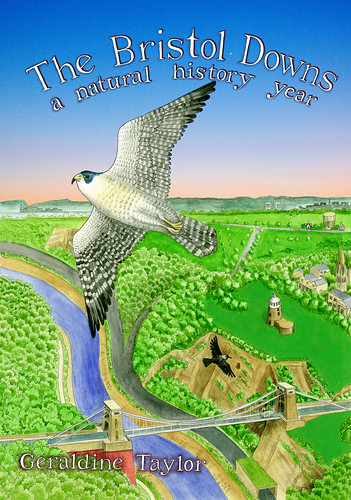
I'm doing some pictures for a new book by Geraldine Taylor. Here's the cover illustration, which is set in Fairyland (as mentioned in an earlier post). The song thrush, however, is modelled upon a stuffed song thrush in Bristol City Museum.

I finished the picture and got it scanned ready to add the words and stuff on Photoshop. And then popped it into a frame and down, along with a few other pictures, to the Natural Health Clinic on Cotham Hill, Bristol, where they are kindly allowing me to hang them this month. It's all good fun and a useful exercise, and so far people have said nice things about the pictures.


recherche du temps perdu


I've been very quiet recently. Thinking about stuff. The other weekend, I went up to Leicester for a little reunion party for the crew of Karen Bravo, a seismic survey ship that I worked on for a few years when I first went to sea.

When Toby (waving his arms around at the back there) put a Facebook group together for the old crew, I had mixed feelings about getting involved, however slightly. But I realised I'd forgotten just how good things were in those days, and what a nice bunch of people I worked with. As the years passed and I took to working in the engine rooms of ferries, I still met and worked with some really good people; but also some thoroughly unsavoury types- seafaring seems to attract the best and worst of kinds. And the last couple of years at sea were something of an never-ending struggle against bigots.

So it was nice to remember the good times. I signed up for the party, which used Tim's 50th birthday as an excuse. Hence the Leicester connection. Seafarers, present and past, converging from around the world to a landlocked Midlands city (though there was a canal close by....)

In a way, it was like returning to the crew mess after a month off and resuming the conversations and badinage that'd been left off on one's departure. Except that this time there'd been a 25 year break, and those familiar voices came from people who had doubled in age. Like me. It took a bit of getting used to, but we managed.

We talked about the stuff we used to get up to, always with strict adherence to Health and Safety regulations...


(...I recalled that, when I subsequently attended a survival craft training course at Warsash, I was shown a slide show of How Not To Do It, a chamber of horrors thing. Nearly all the ships involved had a familiar green and white paintwork. "Western Geophysical?" I asked the lecturer. He nodded his head wearily....)

"We've not changed at all," said Kev. In some ways we have changed radically, and possibly me more than most. But some things just don't change. It was an interesting experience. And we partied until long after midnight. That bit certainly didn't change.


Wednesday, 18 March 2009

Fairyland

Fairyland

(this post mentions the Downs in Bristol. I've put in a bit of context stuff in the post before this one, if you don't know the area and want to know)

I popped in to Bristol Central Library the other day to pick up the latest issue of the Bristol Review of Books. I also picked up a copy of a large pamphlet, issued by the Council, called Lesbian Gay and Bisexual People: FAQs, Myths, ...and the Facts.

I like to keep up with what the Council is up to regarding equalities, or possibly Equalities. I've watched the T fade away from LGBT in Bristol over the last couple of years. It's popped up in the gender section now, where they are apparently working on it. Good show. It's nice to know that someone's thinking about us, even though trans people are excluded from the legislation regarding the provision of goods and services, which means that it's still OK to discriminate on the grounds of being transgendered. Apparently.

Anyway, in the new pamphlet there is a section on media representation and sensationalism. It cites a headline from the Bristol Evening Post- "Scrubland cleared... at an area known as 'Fairyland'"

I wonder if it is the Evening Post or the Council Equalities folk who missed the point (actually, I think it's the Evening Post). Fairyland has been called that since the 19th century, and, while there has been sexual activity on the Downs for as long as there have been people in Bristol, and presumably some of it gay sex, the name of this particular area owes more to a fanciful connection with the Little People than to gay men. Does anyone call them 'fairies' any more?

I mention it because I've been over that way a few times recently, getting pictures for a design I'm working on. Very nice it is too. And the rustlings in the bushes? -they were blackbirds, actually.

the Bristol Downs: geology and history

I live right next to the Downs in Bristol, and I was going to write something about them in my blog, but thought that, if you didn't know the area, a bit of explanation might be useful. So here is the introduction to the geology and history of the Bristol Downs that I wrote for this book

The Bristol Downs: Geology and History

The Bristol Downs are part of a limestone ridge which extends north-eastwards from Clevedon. It was formed by sedimentation and deposition when a tropical sea spread over the area during the early Carboniferous period, 354 million years ago. Fossils of marine creatures can be seen where the rock is exposed. During the Hercynian period (about 290 million years ago), when the ancient continents of Laurasia and Gondwana collided, this rock was folded and pushed up into mountains. It was then eroded, deposited upon, uplifted and again eroded until the present surface was once more exposed.

The Gorge was created during the Ice Ages which have come and gone over the last two million years. The Bristol area wasn’t glaciated, but an ice sheet advanced from Ireland up into the Bristol Channel, and it is probable that the Avon cut its way through the Downs because it had been impeded in its original westward flow through Ashton Vale and beyond by this advancing ice front. In the interglacial periods, animals such as bears, elephants, horses, rhinos and hyaenas inhabited the area. Remains of these animals were found in a quarry in Durdham Down in 1842; today part of this discovery (hyaena and elephant bones) can be seen at the City Museum, along with some stone tools of our ancestors, showing that they too were present. The Downs would have been covered with mixed woodland, except in the steeper and rockier areas which would have been colonised by grasses and scrub, much as they are today.

Tree felling began as long as 4000 years ago, and there are field systems evident between Ladies Mile and the Zoo Banks. During the Iron Age, the Dobunni tribe built a hill fort on Observatory Hill, which, together with the two forts on the Leigh Woods side of the Gorge, dominated the river. The Romans in turn built villas in the area, and the road which they built, linking Bath with the port of Abonae (Sea Mills), can still be traced near Stoke Road. The Saxons established grazing rights on the Downs and left boundary stones from Walcombe Slade (Black Rock Gully) to the Water Tower. By the time of William the Conqueror, The Domesday Book of 1086 records the Manor of Clifton as having a population of thirty, of whom half were farm labourers. The Downs provided grazing for the commoners of Clifton and Henbury, and land was leased by the Lords of the Manors for quarrying, lead mining, and limekilns.

The Downs witnessed some turbulence over the centuries. The Royalist army grouped here before taking the city in 1643, and then the Parliamentarians did the same thing two years later. For centuries this was not an area to cross after nightfall because of the footpads and highwaymen, who, if caught, were suspended from the gibbet at the top of Pembroke Road - or Gallows Acre Lane as it was known until the 1850s. With the advent of turnpikes, a tollbooth was installed at the top of Bridge Valley Road in 1727, and then attacked by rioting miners. More recently, troops were stationed here during both world wars, and the Second World War saw the erection of stone obstacles to prevent the landing of enemy aircraft, the tethering of barrage balloons, and the positioning of an anti-aircraft battery at the Dumps. With the arrival of American troops, the Downs were used as a vehicle assembly area in readiness for D Day, and wild flowers flourished between tanks in this temporary respite from mowing.

More of a threat to the Downs, though, was encroaching development. Clifton became a fashionable place of resort with the development of Hotwells as a spa in the late 17th century. John Evelyn described a hunt for Bristol Diamonds (quartz geodes) in 1654:

What was most stupendous to me, was the rock of St Vincent, a little distance from the Towne, the precipice whereof is equal to any thing of that nature I have seene in the most confragose cataracts of the Alpes: The river gliding between them after an extraordinary depth: Here we went searching for Diamonds, & to the hot Well at its foote….

Although development faltered with Hotwell’s decline, by the 19th century it had again revived with the expanding and affluent middle classes seeking to escape from the noxious industrial heart of the city in the valley of the Frome to the fresher air of the suburbs near the Downs. .Quarrying, mining, clay extraction and illicit enclosure all caused further public concern at the loss of the Downs as an amenity for all the citizens of Bristol. The City bought Durdham Down from the Lords of the Manor of Henbury and, along with the Merchant Venturers who owned the Clifton Downs, obtained an Act of Parliament to ensure free public access.

Plans were enacted for the ‘beautification’ of the Downs. The Circular Road was built, quarry workings were filled in, and avenues of trees planted. Change also came about by the decline in sheep grazing, which had hitherto kept in check the growth in trees and scrub; it died out on Clifton Down in the 19th century, and effectively ended in 1925 on Durdham Down, although the University of Bristol periodically exercise their commoners’ rights, last grazing their sheep here in 2007. Today, management of the Downs is the responsibility of the Downs Committee and Downs Ranger, and they remain a popular resort for nature watching, kite flying, sports, shows, fairs and the countless other pastimes engaged in by Bristolians.